
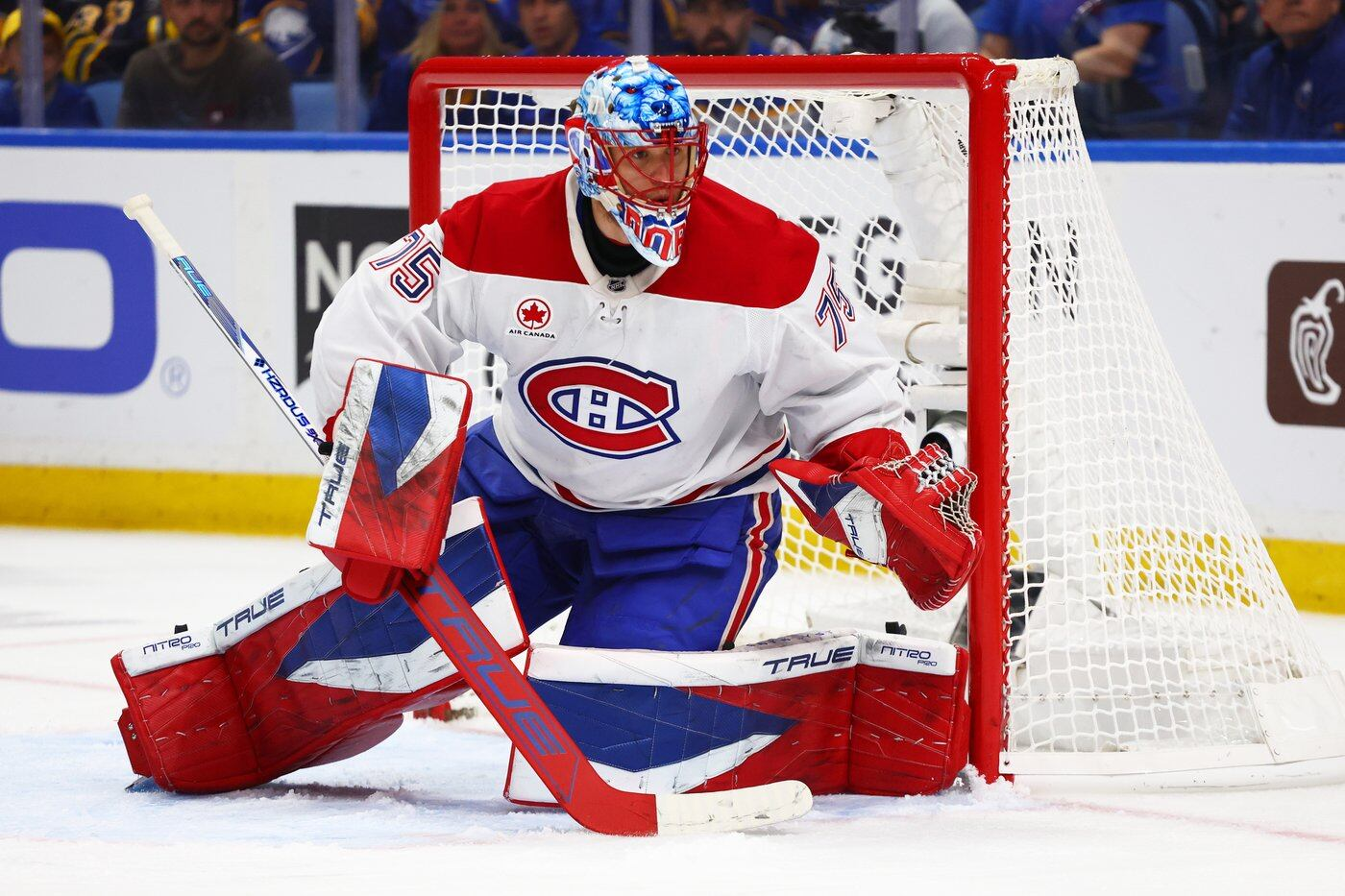
Training camp opened today with a different kind of pressure hanging over the Bell Centre — the Canadiens’ window is wide open, and that’s the good kind of pressure.
For the first time in over a decade, nobody in Montreal is asking the Canadiens to just make the playoffs. After last spring’s run, the only question that matters is how far this group can go — and management spent the summer making sure the answer isn’t “not far enough.”
What Actually Changed This Summer
Kent Hughes didn’t blow anything up, because he didn’t need to. He reinforced a core that already proved it belongs.
- Chris Kreider signed a one-year, $2.15M deal, filling the net-front, trench role that opened up when Brendan Gallagher was traded to Vancouver this summer — except Kreider still has a shooting touch teams have to game-plan around.
- Martin St-Louis signed a multi-year extension through 2029-30, and Derek Lalonde was hired as associate coach, adding an experienced NHL voice — a former head coach — behind him on the bench. Locking up the coach and adding to his staff isn’t what a team does when it’s still figuring out if it belongs where it finished last spring. It’s what a team does when it plans to be there again.
- Arber Xhekaj is back on a one-year, $1.5M contract. Not the term he or his fans were hoping for, but a show-me deal that puts the pressure on him to prove he’s more than a fighter — that he can be a real third-pairing NHL defenseman, full stop.
- Alex Newhook signed a four-year, $22.2M extension, locking in a player who gave Montreal exactly the speed-and-forecheck identity St-Louis wants through the middle of the decade.
- Ivan Demidov signed an eight-year extension on July 1 — the single biggest signature of the summer. A KHL sensation who needed exactly one season to make the NHL’s All-Rookie Team and win a Rookie of the Month award, now locked in through the prime of his career.
- Jakub Dobes signed a three-year, $16.1M extension on July 2 ($5.358M AAV). This is the one that matters most for how this season actually goes — Montreal didn’t just hand its net to the guy who got hot in the playoffs, it bought three years of him at a number that looks like a bargain if last spring was real.
This isn’t a rebuild move. It’s a front office that looked at a team good enough to make a real playoff push and decided the answer was to keep it together, lock in the core long-term, and sharpen the edges.
The Core Is Already Signed. That’s the Whole Point.
This is where the “window is open” talk stops being a vibe and starts being a spreadsheet. Nick Suzuki, Cole Caufield, Juraj Slafkovsky, Ivan Demidov, Lane Hutson, Jakub Dobes — and, dating back a year now, Noah Dobson, acquired from the Islanders and signed to an eight-year deal that gives this blue line a legitimate No. 1-caliber piece next to Hutson. That’s not a group hoping to stay together. That’s a group that’s already under contract to stay together, most of them well into the 2030s.
Behind that core sits a pipeline that only raises the ceiling further: Michael Hage, Alexander Zharovsky, David Reinbacher and Jacob Fowler are all still developing, and every one of them is a legitimate bet to become another core piece rather than just organizational depth. A team doesn’t need all four to hit. It just needs one or two, and the odds of walking away with nothing from that group are low.
It’s Not Just Montreal Saying It Anymore
Here’s the part that should really grab you: this isn’t just a Quebec-media talking point in September. The Athletic’s annual “NHL Contention Cycle” chart, published this same week, plots all 32 teams by present strength and future outlook — and Montreal doesn’t just land in the “Window Open” quadrant, it sits alone at the very top of the entire chart, clear above Dallas, Minnesota, Carolina and Edmonton, the next closest teams in that group. Florida and Tampa Bay, by contrast, are already drifting toward the “Window Closing” side. On the individual team breakdown, Montreal’s roster graded out at an 8.4 present outlook and a 9.9 future outlook.
The reasoning lines up with the names above, tiered roughly the same way, with one addition: Fowler graded out as a legitimate future core piece in his own right, not just goaltending insurance. Even the critique in that piece is a good problem to have — the analysis flagged Montreal still needs a true second-line center and a long-term running mate for Hutson to fully cash in on this. Those aren’t rebuild questions. Those are “how do we get from very good to a Cup contender” questions, and that’s exactly the position this franchise hasn’t been in for a very long time.
The Room Is Already Building Toward It
It’s not just the roster spreadsheet saying this team plans to stick together — the golf day two days before camp opened backed it up on the ground. HABSHQ covered it in detail: St-Louis’s own extension runs through 2029-30, Josh Anderson was promoted into the leadership group alongside Suzuki and Mike Matheson after Gallagher’s trade opened a letter up, and Kreider — who played with St-Louis in New York and calls him a friend personally — got fitted for #22 the same week. None of that is an accident. It’s the same “lock it down, don’t blow it up” approach showing up in the room, not just the cap sheet.
Nick Suzuki set the tone himself that day, telling reporters the goal isn’t just making the playoffs — it’s home-ice advantage in the first round. That’s not a “keep improving” answer. That’s a captain naming the target out loud, and everything the front office did this summer backs him up.
The Goaltending Question Is the Real Variable
Here’s where this team’s season will actually be decided, and it has nothing to do with the forward group.
Kent Hughes has already said there’s no goaltending trade coming this fall — Montreal is running it back with the three names everyone in Quebec has an opinion on: Jakub Dobes, Samuel Montembeault, and Jacob Fowler.
The job is Dobes’ — not just to lose, but with three years and $16.1M behind it now. What he did in the second half of last season, and then in the playoffs, was enough to convince Hughes to buy term before Dobes could get more expensive. That’s a bet, not a guarantee — “enough to earn a contract” and “proven over 60-plus games” are two different things, and camp is where that gap gets tested. Montembeault isn’t a consolation prize behind him; he’s a legitimate NHL backup who’d be a 1B on plenty of rosters, and moving him now for the sake of clearing a depth chart would be the kind of impatient move this management group has specifically avoided making. Fowler, meanwhile, is almost certainly ticketed for Laval to start the year — not because he hasn’t shown flashes of a future No. 1, but because there’s no reason to rush him onto a roster that doesn’t need him yet.
If Montreal gets even average goaltending, this roster wins games. If Dobes turns into what the spring suggested he could be, this roster wins series.
The One Thing That Can Close This Fast
Every contending team has a version of this sentence, and Montreal’s is no different: the projections hold only if the core stays healthy. Florida found that out the hard way last season when they lost Aleksander Barkov — a reminder that depth and record mean less than people think if the wrong name goes down in November.
This isn’t hypothetical for Montreal, either — it’s already the first test of camp. Kaiden Guhle is out four to five weeks after off-season adductor surgery, expected back around mid-October, which means the blue line opens the season without one of its top-four pieces. That’s exactly the kind of thing that separates a team with real depth from one that isn’t as deep as it looks: Guhle’s absence is a real subtraction, but it shouldn’t be a season-altering one on a roster built the way this one is.
Suzuki, Cole Caufield, Lane Hutson, Juraj Slafkovsky — this team’s ceiling is tied directly to that group staying on the ice together. St-Louis has more support now than he did a year ago, and the roster is deeper than it was. But contention windows don’t stay open because a front office wants them to. They stay open because the players in it stay upright.
Bottom Line
This isn’t a “surprise” team anymore, and it shouldn’t be treated like one — and now it’s not just the home broadcast saying so. The expectation has shifted — from hoping for a playoff berth to expecting to compete for the division, and from there, for a real chance at the Atlantic and the Eastern Conference. That’s a heavier standard than this fan base has carried in a long time. It’s also the standard a team graded as having the most wide-open window in hockey should be carrying.
The window is open. Whether it stays open for one season or five is going to come down to health, goaltending, and whether a group that clearly likes playing together can turn that into results when it matters most.
Coach Frenchy’s Take
A lot of experts — and a lot of fans — are already bracing for this window to slam shut fast. I don’t buy it. Not for this team.
Start with the cap sheet. Kent Hughes has built some of the best value in the NHL on a per-dollar basis — deal after deal signed below what the open market would have charged. That’s not just financial housekeeping. It means Montreal has the room to go out and add a higher-priced piece the moment the right one becomes available, without having to break the group up to pay for it.
Then look at the layers. The names up top are already locked in long-term, the wave behind them — Hage, Zharovsky, Reinbacher, Fowler — is still knocking, and the depth doing the unglamorous week-to-week work — Matheson, Newhook, and Guhle once he’s back from his surgery in a few weeks — is signed too, not rentals. That’s what people miss when they say windows close fast: they’re thinking about one or two stars getting hurt or leaving. They’re not thinking about three full layers of a roster all being under contract at the same time.
That’s why I’m not looking at this as a one-year or two-year thing. I’m predicting the Canadiens are a contender for the next five to eight years — not just sneaking into the playoffs, but a real threat every spring. Could an injury or a rough season slow that down for a year? Sure. That’s hockey. But that’s a short-term bump, not a long-term problem. This roster has everything it needs to be a genuine powerhouse in this league for years to come.
— Coach Frenchy
Leave a Reply